
Train Crash Spreads Toxic Chemicals
Original Story (Filipino Accent)
On Feb. 3, a train carrying toxic materials crashed near the Ohio River. On Tuesday, Mike DeWine, the governor of Ohio in the US, said that the cleanup was going well.
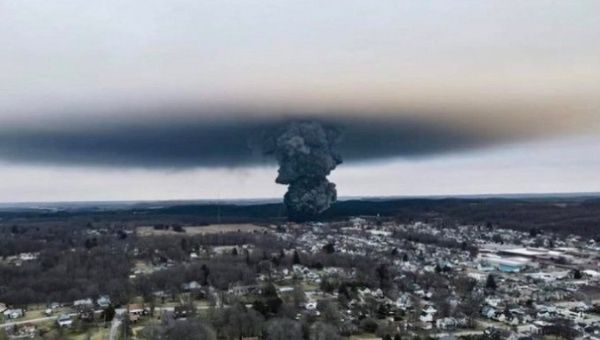
The train that derailed was operated by the company Norfolk Southern Railroad. The crash started a fire which created a large cloud of smoke over East Palestine, Ohio. Thousands of people who live near the crash had to leave their homes.
The railroad workers burned all of the toxic chemicals and on Feb. 8, Governor DeWine said that people could return to their homes.
DeWine says that the toxic chemicals are not very dangerous for the five million people who use the Ohio River for drinking water. However, health and environmental officials warned people with private water wells who live near the crash to use bottled water.
Some residents in the area of the crash say they have had headaches and are worried about their health. They are also worried that the government and railroad are not telling the truth about the dangers from the toxic chemicals.
One of the chemicals on the train was vinyl chloride. It is flammable and can cause cancer, especially if you breathe it in. When vinyl chloride burns, it turns into other toxic chemicals like hydrogen chloride.
Dr. Bruce Vanderhoff, the head of Ohio’s health department, said the chemicals can make your head, eyes and nose hurt, but the air that they tested shows no danger.
Railroad officials have been warning about an accident like this. The government has been cutting costs to try to save money, but the railroad officials think trains are now less safe.
Vocabulary23 words
- Toxic material
- something that is poisonous/dangerous and can harm/hurt people or the environment
- Governor
- the leader or person in charge of a state, region or large area of a country
- Cleanup
- the process or effort of removing dirt, pollution, or other unwanted things from an area to make it clean
- Derail
- when a train comes off its tracks and crashes
- Operate
- to control or use a machine; to manage; run; use;
- Cloud of smoke
- a lot of smoke in one area that looks like a cloud
- Railroad
- a system of tracks and trains used for transportation
- Burn
- to set something on fire or to make something to be destroyed by fire; to start a fire;
- Toxic
- poisonous, harmful and dangerous to living things
- Chemical
- any basic substance that is used in or produced by a reaction involving changes to atoms or molecules
- Environmental
- related to the natural world, the place we live, the area around us, nature
- Official
- a person who works for the government and has power or authority; officer; executive
- Warn
- to tell someone about something bad or dangerous that might happen; alert; notify
- Water well
- a hole in the ground to access/get underground water
- Resident
- a person who lives in a specific place; a person who lives somewhere
- Tell the truth
- be honest; don’t lie
- Danger
- something that is not safe and might cause harm or injury
- Flammable
- can easily catch fire; quickly goes on fire; easy to burn
- Cancer
- a disease in which some of the body's cells grow uncontrollably and spread to other parts of the body
- Breathe in
- to take air into your lungs/body
- Head
- leader, top person, boss
- Accident
- something that happens unexpectedly or without warning, usually a bad thing; an event not intended by anyone; mishap
- Cut costs
- to spend or use less money; to stop buying things to save money
📚 Ready to use these words in a real conversation?
Practice live with a real tutor on Preply.

✅ Nice work on the quiz!
Keep the momentum going — book a live English lesson with a Preply tutor.

Discussion questions
- How can the government and railroad companies prevent similar accidents from happening in the future?
- How can the government and railroad companies get trust from residents who think that they are not being honest about the risks of toxic chemicals?
- How can we balance the need to save money with keeping the public safe and protecting the environment?
🎓 Enjoyed this story?
Turn today's reading into real speaking practice with a live Preply tutor.
More Nature stories
Next story · Medium
ニュース記事を使った英語の学習方法