
Too many news alerts on smartphones
Listen to the story (New Zealand accent)
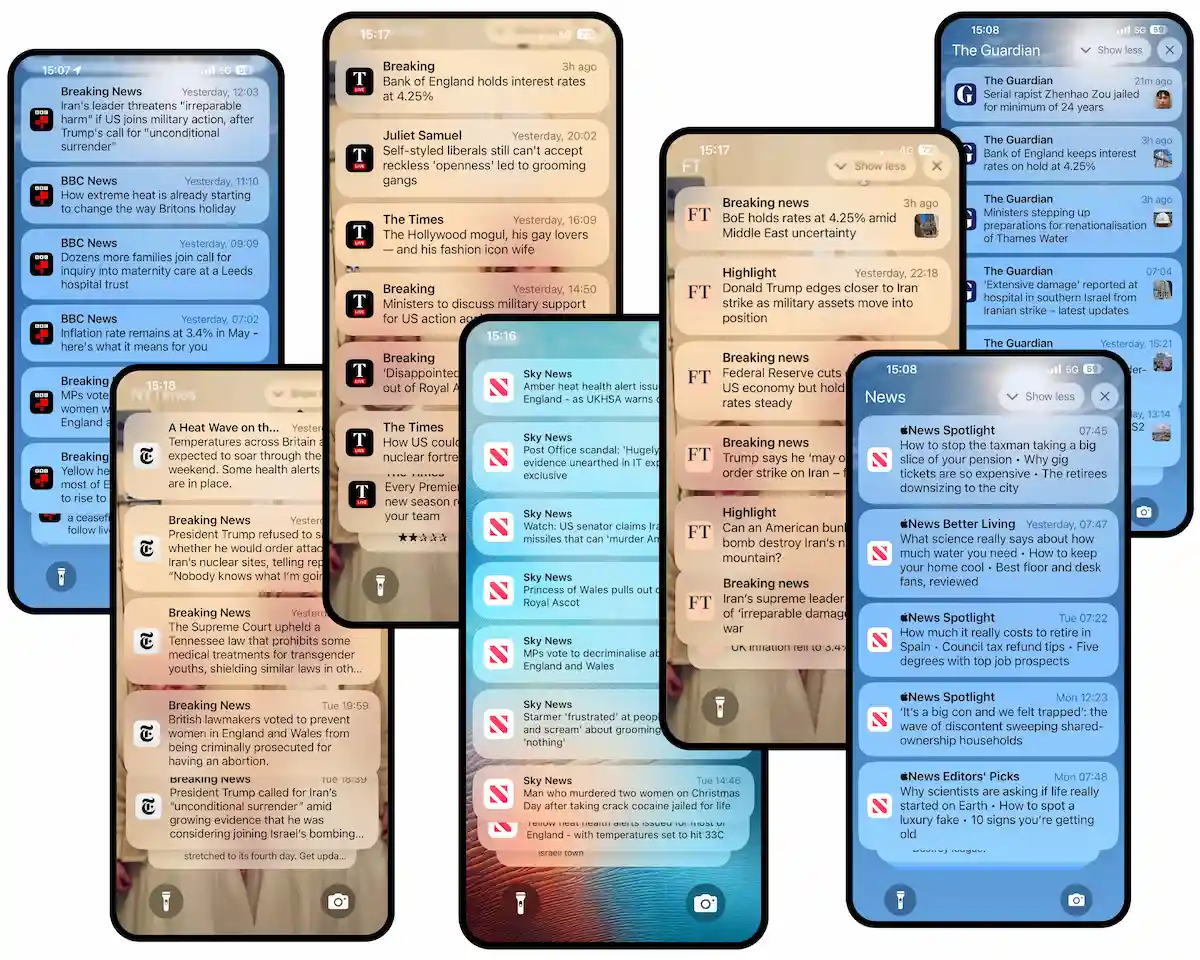
Many people get news updates sent directly to their phones. These alerts tell us about important breaking news.
However, there is a new problem called "alert fatigue." Some people receive 50 news alerts every day. It can be very annoying.
This problem is growing because of news apps like Apple News and Google News. These apps collect news from many sources so you might get several alerts for the same story from different companies.
A recent study by the Reuters Institute looked at this issue in 28 countries. It found that many people are turning off their news alerts. About 43% of people who don't get alerts said they chose to stop them. They complained the alerts were either too frequent or not interesting.
Over the last ten years, the number of people using news alerts has grown a lot. In the United States, weekly use of alerts has increased from 6% to 23% since 2014. In the United Kingdom, it has gone from 3% to 18%.
News companies know they have a difficult challenge. They need to send important news without sending too many updates.
Some news providers send more alerts than others. For example, a study found that The New York Times sends about 10 alerts a day. However, some companies, like CNN Indonesia, send up to 50 alerts daily.
Nic Newman, the writer of the study, says companies must be careful. If they send too many alerts, people might delete their app. He says people feel tired of constant news and do not want to be distracted. They don't want news all the time.
Vocabulary30 words
- Update
- new information; the latest news or details
- Directly
- straight to something, without any stops
- Alert
- A signal or notification that something needs attention; A message that tells you something important
- Breaking news
- Important news that is happening right now
- Fatigue
- The feeling of being very tired
- Receive
- get; take in; accept; encounter;
- Annoying
- Something that bothers you; something that makes you uncomfortable or angry
- Grow
- To become bigger or increase in size; become; to get larger;
- App (application)
- computer software/program, especially for smartphones and tablets
- Collect
- bring together; gather; take in
- Source
- any thing or place from which something comes from or is obtained; origin; where something comes from; the original; a reference; a person who tells secrets
- Several
- some; more than 2, but not many
- Recent
- not long ago;
- Study
- the activity of examining/studying something in detail to discover new information; research; investigation
- Look at
- To check or learn about something
- Issue
- a subject or problem that people are thinking and/or talking about; matter; topic; problem
- Find
- realize; learn; discover;
- Choose
- to decide; to pick; to pick out;
- Complain
- to say you’re not happy or you don’t like something
- Frequent
- Happening often
- Over the last
- during a time period that just ended
- Weekly
- happening every week
- Challenge
- problem; obstacle; something that needs a lot of work in order to be done successfully
- Provider
- A company that gives you something
- Daily
- happening every day
- Writer
- a person who writes, especially books and stories
- Delete
- To remove or erase something completely
- Constant
- happening all the time without stopping
- Distracted
- When you can't focus because something is taking your attention
- All the time
- happening again and again
📚 Ready to use these words in a real conversation?
Practice live with a real tutor on Preply.
Quiz
Answer key
1. It has increased from 6% to 23%. 2. To send important news without sending too many updates. 3. False
✅ Nice work on the quiz!
Keep the momentum going — book a live English lesson with a Preply tutor.

Fill-in-the-blank listening
Play the audio again and fill in the missing words as you listen.
Many people _____ news updates sent directly to their phones. These _____ tell us about important breaking news.
_____ , there is a new problem called "alert fatigue." Some people receive _____ news alerts every day. It can be very annoying.
_____ problem is growing because of news apps like Apple News and _____ News. These apps collect news from many sources _____ you might get several alerts for the same story from _____ companies.
A recent study by the Reuters Institute _____ at this issue in 28 countries. It found that many people are _____ off their news alerts. About 43% of people who don't get alerts _____ they chose to stop them. They complained the alerts _____ either too frequent or not interesting.
_____ the last ten years, the number of people using _____ alerts has grown a lot. In the United States, weekly _____ of alerts has increased from 6% to 23% since _____ . In the United Kingdom, it has gone from 3% to _____ %.
News companies know they _____ a difficult challenge. They need to send important news _____ sending too many updates.
Some news _____ send more alerts than others. For example, a study found that The New York Times _____ about 10 alerts a day. However, _____ companies, like CNN Indonesia, send up to _____ alerts daily.
Nic Newman, the writer of the _____ , says companies must be careful. If they send too _____ alerts, people might delete their app. _____ says people feel tired of constant news and do not want to be _____ . They don't want news _____ the time.
Discussion questions
- Do you get news alerts on your phone? How often do you receive them?
- Have you ever felt "alert fatigue" from any app, not just news apps? What did you do?
- What do you think is a good number of news alerts to receive in one day? Why?
- If you were a news company, how would you decide which news is important enough to send as an alert?
- What are the benefits of getting news alerts? What are the disadvantages?
- Do you prefer to get news updates from your phone, or from other sources like TV or newspapers? Why?
🎓 Enjoyed this story?
Turn today's reading into real speaking practice with a live Preply tutor.

More Other stories
Next story · Medium
Spanish use water guns to protest tourism