
Polar Bears in Canada Decreasing Quickly
Listen to the story (British accent)
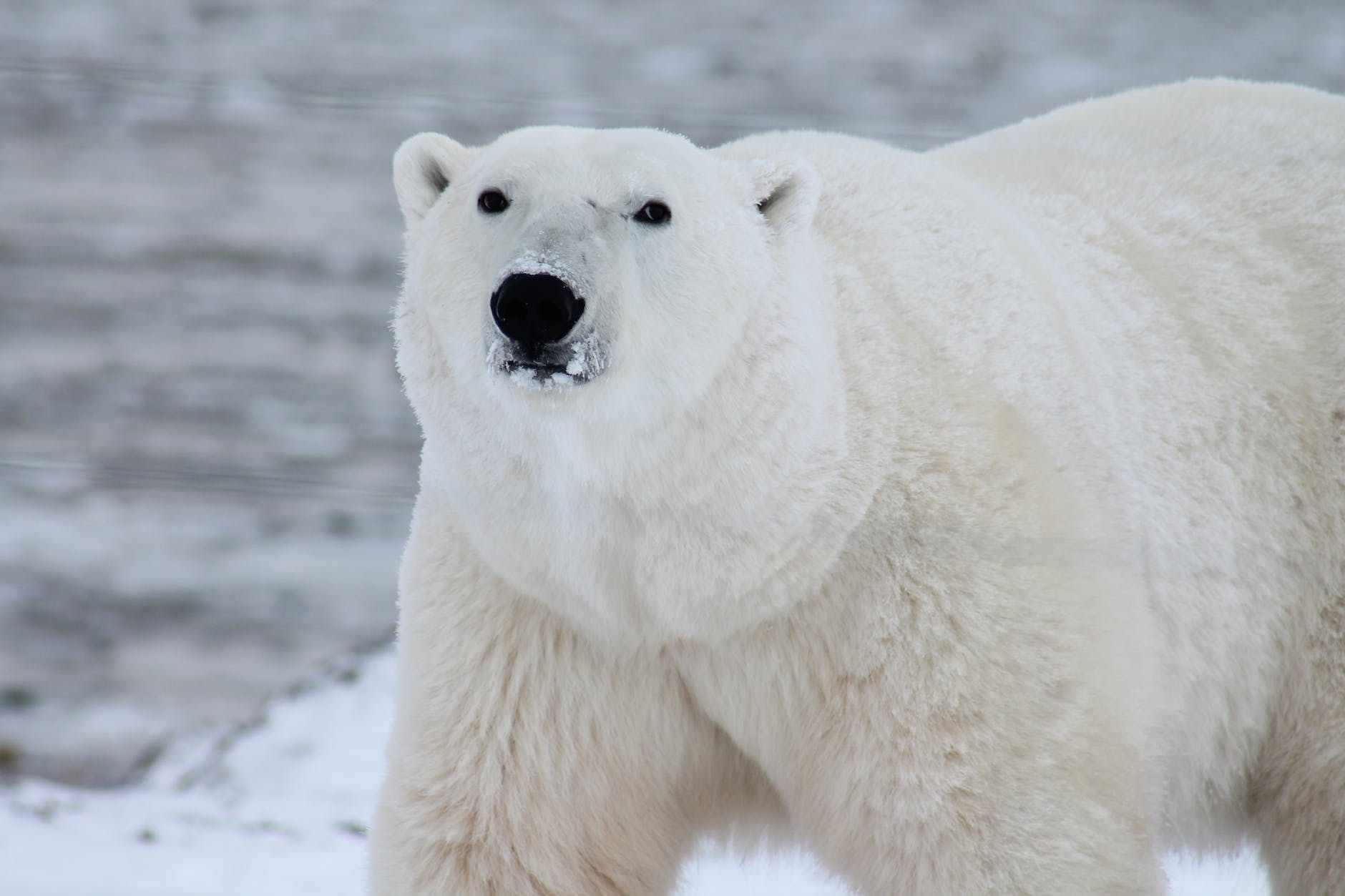
A government survey shows that polar bears near the western part of Hudson Bay in Canada are quickly disappearing.
Particularly, the number of female bears and young bears, called cubs, has declined dramatically.
Every five years, researchers fly over a town called Churchill and the western Hudson Bay region to count the polar bears. Churchill is sometimes called the “polar bear capital of the world.”
The last survey was done in late August and early September 2021. The results from that survey were released this month and show that there are less polar bears. During the survey, researchers counted 194 bears. Using that number, they estimate that the total bear population is now 618. Five years ago, they estimated the population to be 842 bears.
The researchers said that the decrease in polar bears is what they expected to happen because of climate change. Other reasons for the decline are that some bears have moved to other regions, and hunting.
Polar bears need ice to cover the bay for hunting, reproducing, and moving to other areas. However, the sea ice in the western Hudson Bay area is now thinner than usual, melts early in the spring and freezes late in the fall because of climate change.
A report from two years ago says that there were 1,200 polar bears in the western Hudson Bay area in the 1980s. Some people are worried that polar bears will become extinct.
Vocabulary23 words
- Survey
- a study of something, usually by collecting and analyzing data in order to learn more about it
- Show
- to prove something or make the truth or existence of something known; confirm; demonstrate; validate
- Bay
- a small body of water that is connected to a larger body of water
- Disappear
- can’t be found; vanish; not able to be seen
- Cub
- a young animal, especially a lion, tiger, or bear
- Decline
- go down; decrease
- Dramatically
- in a way that is very noticeable or impressive, often in a way that is unexpected or sudden
- Researcher
- a person who does research; a person who studies something to find new results
- Region
- a large area of the Earth; an area of land with similar qualities/characteristics
- Capital
- the most important place for a particular business or activity (Paris is the fashion capital of Europe)
- Late (August)
- at the end of (August)
- Early (August)
- at the beginning of (August)
- Result
- outcome; findings; conclusion; answer;
- Release
- make available to everyone; launch; put on the market
- Estimate
- guess; approximate; judge; suppose
- Population
- a community of animals, plants, or humans; all the living things of a particular type or group which live in a particular area or environment.
- Expect
- to think something will happen; forecast; predict; suppose
- Climate change
- the fast and dangerous change in weather happening around the world
- Hunt
- to search for and try to catch or kill an animal, especially for sport
- Reproduce
- When living things reproduce, they produce young plants, animals, etc.; to produce a new living thing of the same type as itself
- Melt
- to turn from solid to liquid;
- Report
- a written description of an event; story; article; the results of a study or project
- Extinct
- no longer alive; no longer existing; no longer used;
📚 Ready to use these words in a real conversation?
Practice live with a real tutor on Preply.

✅ Nice work on the quiz!
Keep the momentum going — book a live English lesson with a Preply tutor.

Discussion questions
- How has the population of polar bears in the western Hudson Bay region of Canada changed over time, and what are some possible reasons for this change?
- What impact does the sea ice in the western Hudson Bay region have on polar bears, and how has climate change affected the sea ice in this region?
- What can be done to address the declining population of polar bears in the western Hudson Bay region, and what are the potential consequences of not taking action to address this issue?
🎓 Enjoyed this story?
Turn today's reading into real speaking practice with a live Preply tutor.

More Nature stories
Next story · Medium
All about the TOEIC Test