
Orangutan uses plant as medicine
Listen to the story (American accent)
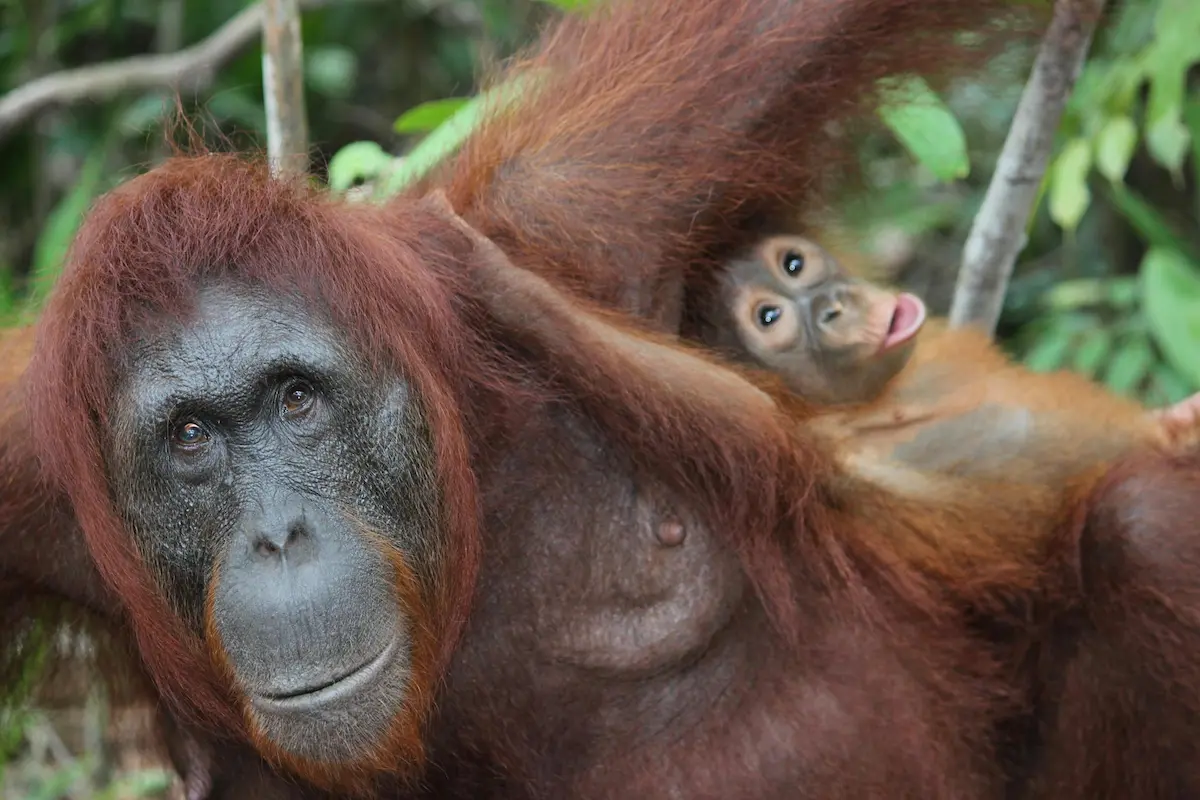
An orangutan amazed scientists by using a plant paste to heal a big cut on his face. It is the first time a wild animal was seen using a plant as medicine for a wound.
In June 2022, researchers in Indonesia noticed the orangutan, named Rakus, had a large wound on his face. They think he got hurt in a fight with other male orangutans.
Later, they saw Rakus chewing a plant called Akar Kuning. This plant is often used to help sick people and treat malaria and diabetes.
After some chewing, he put the paste from the plant on his cheek for seven minutes and then put the chewed leaves on his wound. He continued eating the plant for over half an hour.
Scientists think this behavior might come from a common ancestor of humans and great apes.
The plant seemed to help. Five days later there was no infection, and the wound was closed. After a month, Rakus was fully healed.
The scientists believe Rakus knew he was using medicine because orangutans rarely eat this plant. Also, he spent a lot of time treating his wound. They also noticed Rakus resting a lot, so maybe he was trying to recover from his injury.
Scientists already knew that great apes use medicine to heal themselves. But this is the first time they’ve seen a wild animal treat a wound.
It’s possible Rakus learned to treat wounds from watching other orangutans. Now, researchers will watch other orangutans closely to see if they show the same medical skills as Rakus.
Vocabulary26 words
- Orangutan
- A type of big ape with red-brown hair that lives in forests
- Amaze
- To make someone feel very surprised; to impress someone
- Scientist
- a person who studies science or the natural world; researcher; ?????
- Paste
- a thick, sticky mixture; A thick, soft, moist substance, usually produced by mixing dry ingredients with a liquid;
- Heal
- To get better from an injury or illness; to feel better after you are hurt or sick
- Wild
- Living in a natural state, not kept or controlled by humans; Not in a zoo or someone's home, where animals live freely
- Wound
- An injury to your body that often involves a cut or break in the skin
- Researcher
- a person who does research; a person who studies something to find new results
- Notice
- to become aware of; to see; to learn of something
- Male
- man; boy
- Chew
- To use your teeth to break up food in your mouth
- Treat
- to take care of something and make it better; to try to “fix”
- Malaria
- a disease that you can get from being bitten by a mosquito ?
- Diabetes
- A health condition where your body has trouble controlling the amount of sugar in your blood
- Cheek
- the soft part of your face that is next to your nose and below your eye;
- Leaf (leaves)
- ? ?
- Behavior
- How someone or something acts or behaves; the way someone is or acts
- Common
- shared; the same;
- Ancestor
- someone who is related to you way back in the past; A family member who lived a long time ago
- Human
- a person; a man, woman or child
- Infection
- a sickness or disease caused by germs;
- Rarely
- not often; seldom; less than “sometimes”
- Recover
- to return or come back to normal; rally; rebound; to get back something you lost
- Injury
- wound; damage to the body; broken body part
- Medical
- relating to medicine or health care; the practice of medicine or the treatment of illness and injuries
- Skill
- something that you are good at doing; The ability to do something well;
📚 Ready to use these words in a real conversation?
Practice live with a real tutor on Preply.

Quiz
Answer key
1. Because orangutans rarely eat this plant 2. People have never seen an orangutan use medicine 3. False
✅ Nice work on the quiz!
Keep the momentum going — book a live English lesson with a Preply tutor.

Fill-in-the-blank listening
Play the audio again and fill in the missing words as you listen.
An orangutan _____ scientists by using a plant paste to heal a big cut on his _____. It is the first time a wild animal was seen using a plant as _____ for a wound.
In June 2022, researchers in _____ noticed the orangutan, named Rakus, had a _____ wound on his face. They think he got hurt in a fight with other _____ orangutans.
Later, they saw Rakus chewing a _____ called Akar Kuning. This plant is often used to help sick _____ and treat malaria and diabetes.
_____ some chewing, he put the paste from the plant on his cheek for _____ minutes and then put the chewed leaves on his wound. He _____ eating the plant for over half an hour.
Scientists think this behavior _____ come from a common ancestor of humans and great apes.
The plant _____ to help. Five days later there was no infection, and the wound was closed. After a _____, Rakus was fully healed.
The scientists _____ Rakus knew he was using medicine because orangutans rarely eat this _____. Also, he spent a lot of time treating his wound. They also _____ Rakus resting a lot, so maybe he was trying to recover from his _____.
Scientists already knew that great apes _____ medicine to heal themselves. But this is the first time they’ve seen a wild _____ treat a wound.
It’s possible Rakus learned to treat wounds from _____ other orangutans. Now, researchers will watch other orangutans closely to see if they _____ the same medical skills as Rakus.
Discussion questions
- How do you think this discovery might change the way we understand animals and their behavior?
- Do you think other animals besides orangutans might use plants as medicine? Why or why not?
- Can you think of any other examples of animals using things in their environment to help themselves?
- Do you think animals are smarter than we give them credit for? Why or why not?
🎓 Enjoyed this story?
Turn today's reading into real speaking practice with a live Preply tutor.
More Nature stories
Next story · Medium
Measles cases doubled in one year