
Japanese Engineer Builds Drones You Can Eat
Listen to the story (Australian accent)
Jun Shintake, an engineering professor at Japan's University of Electro-Communications, thinks that edible drones can help save lives.
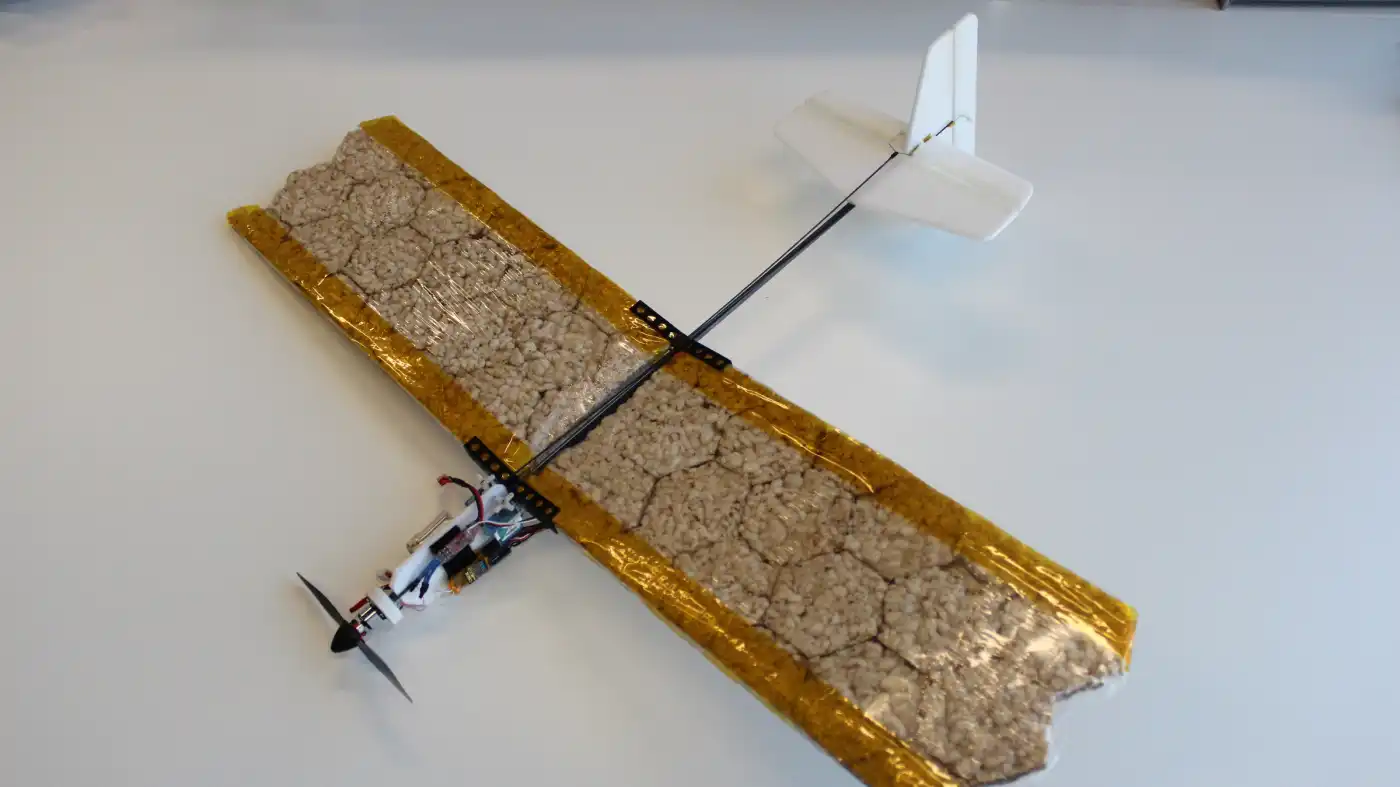
Shintake is working with researchers from Switzerland to create edible robots for different types of situations. Their new design is a flying drone with wings made of rice crackers.
The prototype is about 70 centimeters wide and the rice cracker wings are connected together by gelatin. The edible parts of the drone contain about 300 calories. The drone can also carry about 80 grams of water.
The researchers think that a drone like this can quickly deliver emergency food to people in remote places.
Currently, about 50% of the drone is edible. The team of researchers was to increase this to around 75%, and maybe one day the whole drone will be edible.
The team is improving the drone's durability and how far it can fly. Then, they want to commercialize it.
Shintake also thinks that edible robots might be helpful in factories. One of his teams has made a robotic arm from gelatin and other edible material. The robotic arm moves like a human finger and is strong like rubber.
Shintake says that it’s safer to use edible materials for robots in factories that make food. It lowers the chance of dangerous material, like metal, getting into the food.
Vocabulary22 words
- Engineer
- a person who designs, builds, and/or maintains engines, machines, buildings, etc.
- Edible
- something that is safe to eat;
- Drone
- an aircraft that does not have a pilot but is controlled by someone on the ground
- Researcher
- a person who does research; a person who studies something to find new results
- Situation
- condition; circumstance; state of affairs; the way it is; event; occurrence
- Rice cracker
- a food made from rice that has been cooked, made flat, and then baked or fried until crispy
- Prototype
- example; the first version; the original which will be copied later;
- Gelatin
- a clear material made from animal collagen that is used to make food thick, such as jellies or desserts; a translucent, colorless, flavorless food ingredient
- Part
- one of the pieces that together form a machine or some type of equipment; component; (My bike has a broken part)
- Contain
- to have within; to hold inside; to be part of
- Calorie
- a unit used in measuring the amount of energy food gives you when eaten and digested
- Deliver
- to bring something to a person or to a place
- Emergency
- a dangerous/serious and sudden/unexpected situation
- Remote
- something that is far away; isolated; secluded; far from many people
- One day
- in the future; possibly; at a later time
- Improve
- to make something better
- Durability
- the quality of being able to last a long time without becoming damaged; the ability of something to withstand heavy use or damage over a long time
- Commercialize
- to make a product or service available for sale; to try to make money using or selling something
- Factory
- a large building where things are made or produced
- Material
- a physical thing that you use to build or make other things (cotton is a common material used to make t-shirts)
- Rubber
- a flexible and somewhat soft material that is used to make tires and the bottom part of sneakers
- Chance(s)
- a possibility of something happening; odds;
📚 Ready to use these words in a real conversation?
Practice live with a real tutor on Preply.

✅ Nice work on the quiz!
Keep the momentum going — book a live English lesson with a Preply tutor.

Discussion questions
- What do you think of the idea of edible drones? Can you think of any other situations where edible robots might be useful?
- What do you think are some possible drawbacks or concerns with using edible materials in creating drones or robots?
- Would you want to try eating an edible drone or robotic arm made from edible materials? Why or why not?
🎓 Enjoyed this story?
Turn today's reading into real speaking practice with a live Preply tutor.

More Science stories
Next story · Medium
Argentina Wants to Export Cannabis