
FBI returns art stolen during WWII to Japan
Listen to the story (Hong Kong accent)
A family in Massachusetts, USA found a lot of valuable Asian art in their late father’s attic.
The family contacted the FBI because they realized the art might be important. Their father was a World War II veteran, but the FBI says he wasn’t in Asia during the war.
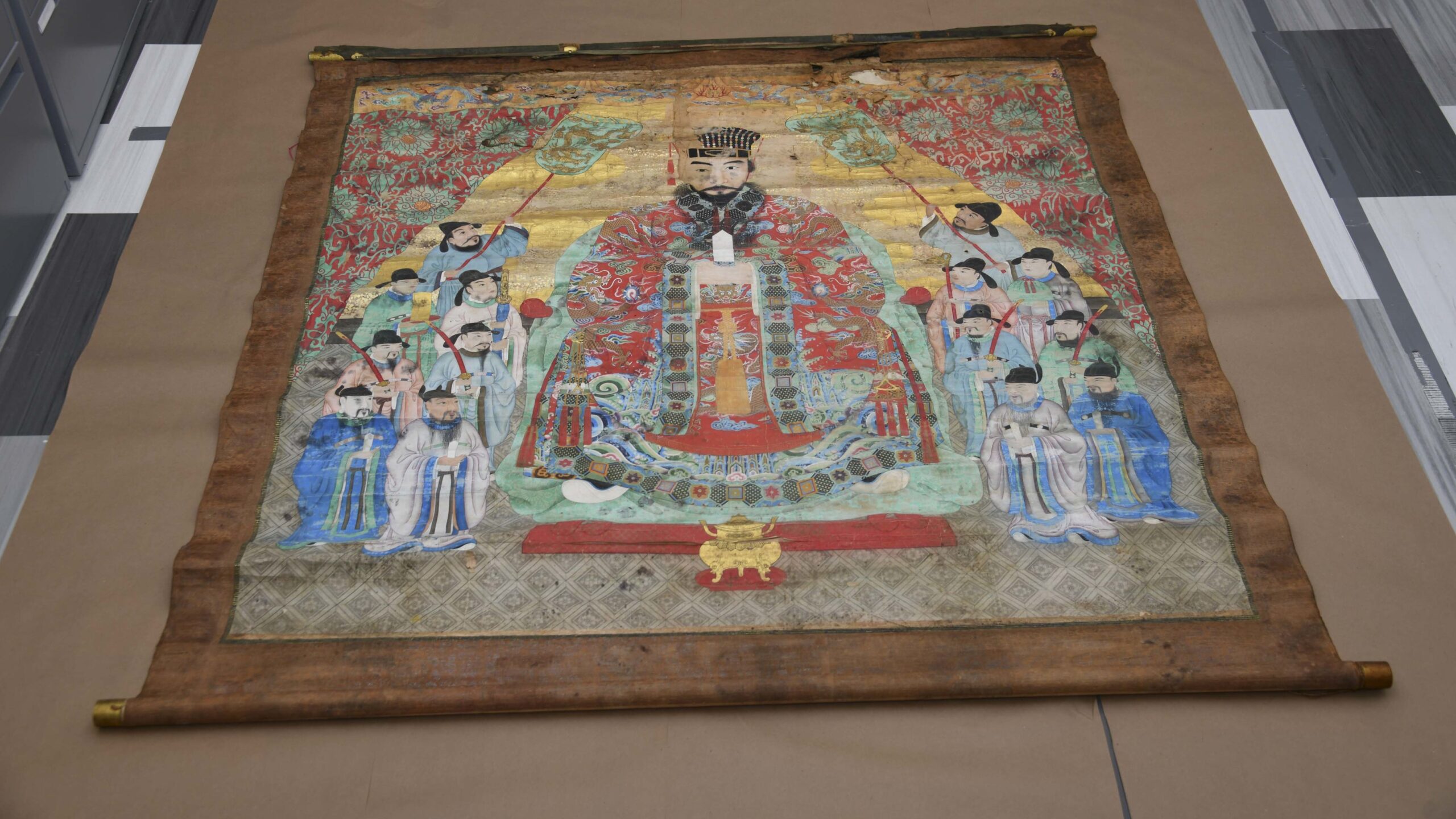
The art included scrolls, pottery, and an old map. FBI Special Agent Geoffrey Kelly said the items looked “old and valuable”. The family did some research and found out that the scrolls were listed in the FBI’s National Stolen Art File about 20 years ago.
The art pieces were from the 18th and 19th centuries. They included six painted scrolls, a detailed map of Okinawa (Japan’s fifth largest island), and pottery items like plates, bowls, and teapots.
The scrolls were studied at the Smithsonian Institution’s National Museum of Asian Art in Washington, D.C. They contained colorful pictures of Okinawan royalty.
A letter found with the art confirmed that these items were taken during the last days of World War II. Agent Kelly said these artifacts are a big part of Okinawa’s history.
He also said that a nation’s culture is reflected in its artifacts and history. If you take away a culture’s artifacts, you take away its history. That’s why it’s important to return these items to where they belong.
Last week, the FBI returned the artifacts to Okinawa. However, they said that some Okinawan items are still missing and are listed in the National Stolen Art File.
Vocabulary25 words
- Valuable
- worth a lot of money; very important;
- Late
- dead; No longer alive
- Attic
- A space or room inside the roof of a house; storage space at the very top of a house
- FBI
- Stands for Federal Bureau of Investigation. They are like detectives for important crimes in the United States;
- Realize
- to become aware; to notice; understand; recognize; see
- Veteran
- Someone who has served in the military;
- Include
- to contain; incorporate; to be part of; to have something smaller as a part of it; come with
- Scroll
- A long piece of paper with writing or pictures on it
- Pottery
- Clay pots, bowls, and other objects that are baked hard; Things (like pots and vases) that are made from clay
- Agent
- A special officer who works for the FBI;
- Item
- a single object or thing; one piece; a product
- Research
- the process/act of studying something to learn more about it and gain new understanding
- Find out
- discover; learn; understand
- List
- to write a bunch of things down one after another; to write things in a row
- Art piece
- Something that is made by an artist like a painting or sculpture
- 19th Century
- the years 1800 to 1899
- Study
- to learn more; to research;
- Contain
- to have within; to hold inside; to be part of; to include
- Royalty
- Kings, queens, and their families;
- Confirm
- to prove true or accurate; to report that something is true or fact
- Artifact
- An old object, usually made by people, that tells us about history;
- Nation
- Country; a group of people who live in the same place
- Culture
- The beliefs, customs, arts, etc., of a group of people; The way of life of a group of people
- Reflect
- To show something;
- Return
- to give back or take something back to a store or place where it came from
📚 Ready to use these words in a real conversation?
Practice live with a real tutor on Preply.

✅ Nice work on the quiz!
Keep the momentum going — book a live English lesson with a Preply tutor.
Fill-in-the-blank listening
Play the audio again and fill in the missing words as you listen.
A _____ in Massachusetts, USA found a lot of _____ Asian art in their late father’s attic.
The family _____ the FBI because they realized the art might be _____. Their father was a World War II veteran, but the FBI _____ he wasn’t in Asia during the _____.
The art included scrolls, _____, and an old map. FBI Special Agent Geoffrey _____ said the items looked “old and _____”. The family did some research and found out that the scrolls were _____ in the FBI’s National Stolen Art File about _____ years ago.
The art pieces were from the _____ and 19th centuries. They included six painted scrolls, a _____ map of Okinawa (Japan’s fifth largest _____), and pottery items like plates, bowls, and _____.
The scrolls were _____ at the Smithsonian Institution’s National Museum of Asian Art in Washington, D.C. They _____ colorful pictures of Okinawan royalty.
A letter _____ with the art confirmed that these items were taken _____ the last days of World War II. Agent Kelly said these _____ are a big part of Okinawa’s history.
He _____ said that a nation’s culture is reflected in its artifacts and _____. If you take away a culture’s artifacts, you take _____ its history. That’s why it’s important to _____ these items to where they belong.
Last _____, the FBI returned the artifacts to Okinawa. However, they said that some _____ items are still missing and are listed in the National Stolen Art _____.
Discussion questions
- Do you think the family did the right thing by contacting the FBI about the valuable Asian art? Why or why not?
- In your opinion, is it important for stolen cultural artifacts to be returned to their place of origin?
- Should museums and institutions have to return artifacts to their original countries, even if they got them legally? Why or why not?
- What role do cultural artifacts play in preserving a nation’s history?
🎓 Enjoyed this story?
Turn today's reading into real speaking practice with a live Preply tutor.
More Entertainment stories
Next story · Medium
Putin wins Russian election