
Cup Noodles will make microwave-safe package next year
Listen to the story (British accent)
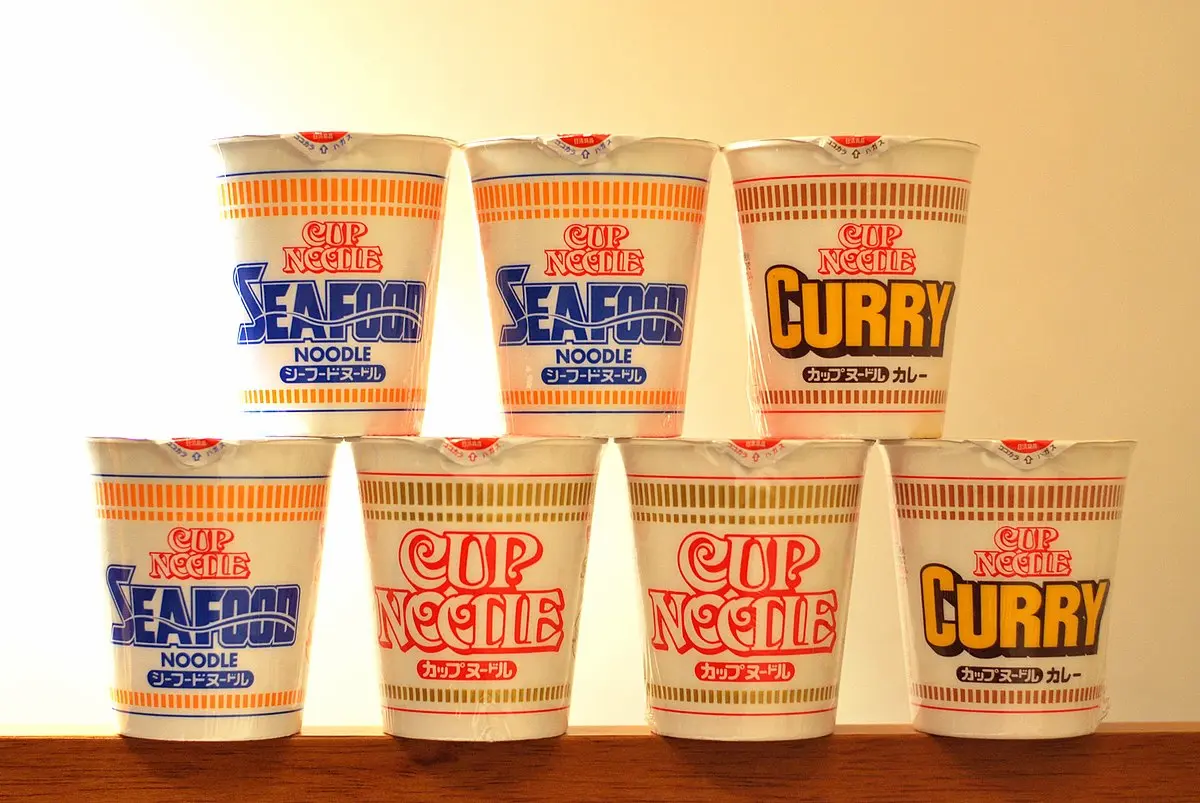
Nissin has announced new packaging for its Cup Noodles in 2024. The company will use paper instead of the polystyrene it uses now.
This change will also make the Cup Noodles safe to microwave. The polystyrene package is not safe to put in the microwave.
According to internet reactions, it seems that many people did not read the instructions on the Cup Noodles packaging. Some people were surprised to learn that the original Cup Noodles should not be microwaved. However, the label clearly says, "Do not microwave."
This confusion might be because there are many different types of instant noodle brands and containers, and some of them can be microwaved.
Another reason for the confusion can be that electric kettles are more common in some places like Japan or Europe, but not popular in places like the US.
Polystyrene is used for food containers because it's lightweight, inexpensive, and keeps food warm. However, when heated, it releases a harmful chemical which can be a cancer risk.
Microwaving polystyrene can also make the Cup Noodles less sturdy and cause burns if the cup breaks. A study found that one-third of childhood burns were caused by instant noodles.
Nissin is also making these changes to help the environment. The new cups will be made from 40 percent recycled paper and won't include plastic wrapping.
Polystyrene is not easy to recycle, and some places have banned it in recent years.
The new microwavable Cup Noodles will be faster to prepare because you won’t need to boil water.
Vocabulary32 words
- Announce
- share information openly; to tell the public; to make a statement; to report
- Packaging
- materials used to wrap and protect products for sale and transport; the box or plastic container that a product is in
- Instead of
- rather than; in place of; “not that, but something else”; substitute; alternative
- Polystyrene
- A type of soft plastic that is often used to make food containers
- Microwave
- to heat or make something hot in a microwave; a machine that uses electricity to heat food quickly
- According to
- as ‘someone’ said; as stated by ‘someone’; in the opinion of ‘someone’
- Reaction
- How someone feels or acts in response to something; behavior, a feeling or an action that is a direct result of something else
- Instruction
- directions or guidance given to someone to follow; order; directive; command
- Surprised
- Feeling shocked or amazed; the feeling when you suddenly learn something big and important
- Label
- a small piece of material attached to an object that gives information about it. It is usually made of paper, fabric, or plastic; tag; ticket; stamp
- Confusion
- a situation in which people do not understand what is happening, what they should do; disorder; chaos
- Brand
- the name of a company and its image; one product with a specific name made by one company, e.g., Sprite is one of Coca-Cola’s brands
- Container
- Something that holds or stores items
- Electric kettle
- A small machine that quickly heats or boils water using electricity
- Inexpensive
- not expensive
- Release
- To let go or set free; to let out into the world; to let something out
- Harmful
- damaging; hurtful; negative; bad for
- Chemical
- any basic substance that is used in or produced by a reaction involving changes to atoms or molecules
- Cancer
- a disease in which some of the body's cells grow uncontrollably and spread to other parts of the body
- Risk
- danger; chance of danger; the possibility of danger
- Sturdy
- Strong and not easily broken
- Cause
- make something (usually bad) happen; create
- Burn
- to be hurt, damaged, or destroyed by fire, extreme heat or chemicals
- Study
- the activity of examining/studying something in detail to discover new information; research; investigation
- Find
- realize; learn; discover;
- One-third
- ⅓; one piece of three; 33.33 %
- Childhood
- The time when you are a kid
- Environment
- the natural world; the place we live; the area around us; nature; Earth
- Recycled
- material that is being used again, material that was changed; reused
- Include
- to contain; incorporate; to be part of; to have something smaller as a part of it; come with
- Ban
- to not allow; to stop; to forbid; prohibit;
- Boil
- To heat water to 100 degrees Celsius
📚 Ready to use these words in a real conversation?
Practice live with a real tutor on Preply.

✅ Nice work on the quiz!
Keep the momentum going — book a live English lesson with a Preply tutor.

Fill-in-the-blank listening
Play the audio again and fill in the missing words as you listen.
Nissin _____ announced new packaging for its Cup Noodles in _____. The company will use paper _____ of the polystyrene it uses now.
This _____ will also make the Cup Noodles safe _____ microwave. The polystyrene package is not safe to _____ in the microwave.
According to _____reactions, it seems that many people did not _____ the instructions on the Cup Noodles packaging. Some _____ were surprised to learn that the original Cup Noodles _____ not be microwaved. However, the _____ clearly says, "Do not microwave."
This _____ might be because there are many different types of _____ noodle brands and containers, and some of _____ can be microwaved.
_____ reason for the confusion can be that _____ kettles are more common in some places like Japan or _____, but not popular in places like the US.
Polystyrene is _____ for food containers because it's lightweight, inexpensive, and _____ food warm. However, when _____, it releases a harmful chemical which can be a cancer _____.
Microwaving polystyrene _____ also make the Cup Noodles less sturdy and cause _____ if the cup breaks. A study found that one-third of _____ burns were caused by instant noodles.
Nissin is also _____ these changes to help the environment. The new cups will be _____ from 40 percent recycled_____ and won't include plastic wrapping.
Polystyrene is not easy to _____, and some places have banned it in recent _____.
The new _____ Cup Noodles will be faster to prepare because you won’t need to _____ water.
Discussion questions
- How do you prefer to prepare instant noodles, using a microwave or boiling water in an electric kettle? Do you always read the instructions?
- Do you think people should be more careful about reading the instructions on food packaging? Why or why not?
- What do you think of Nissin's decision to switch to paper packaging for Cup Noodles?
- Do you think it's essential for companies to consider the environmental impact of their packaging materials?
🎓 Enjoyed this story?
Turn today's reading into real speaking practice with a live Preply tutor.

More Business stories
Next story · Medium
Ice hockey player dies in terrible skate accident