
Christmas candy already in shops
Listen to the story (British accent)
During the winter holidays, retailers become really busy.
This year, retailers in the UK think each customer will spend about £743 ($900) on things like gifts and candy for Christmas, Kwanzaa, Hanukkah, and other celebrations.
Candy makers and stores that sell candy count on the winter holidays to make a lot of money. For Hershey, the biggest chocolate maker in the world, the winter holidays, Halloween, and Easter are one quarter of their annual business.
If the candy doesn’t sell, it’s expensive for the candy makers and retailers.
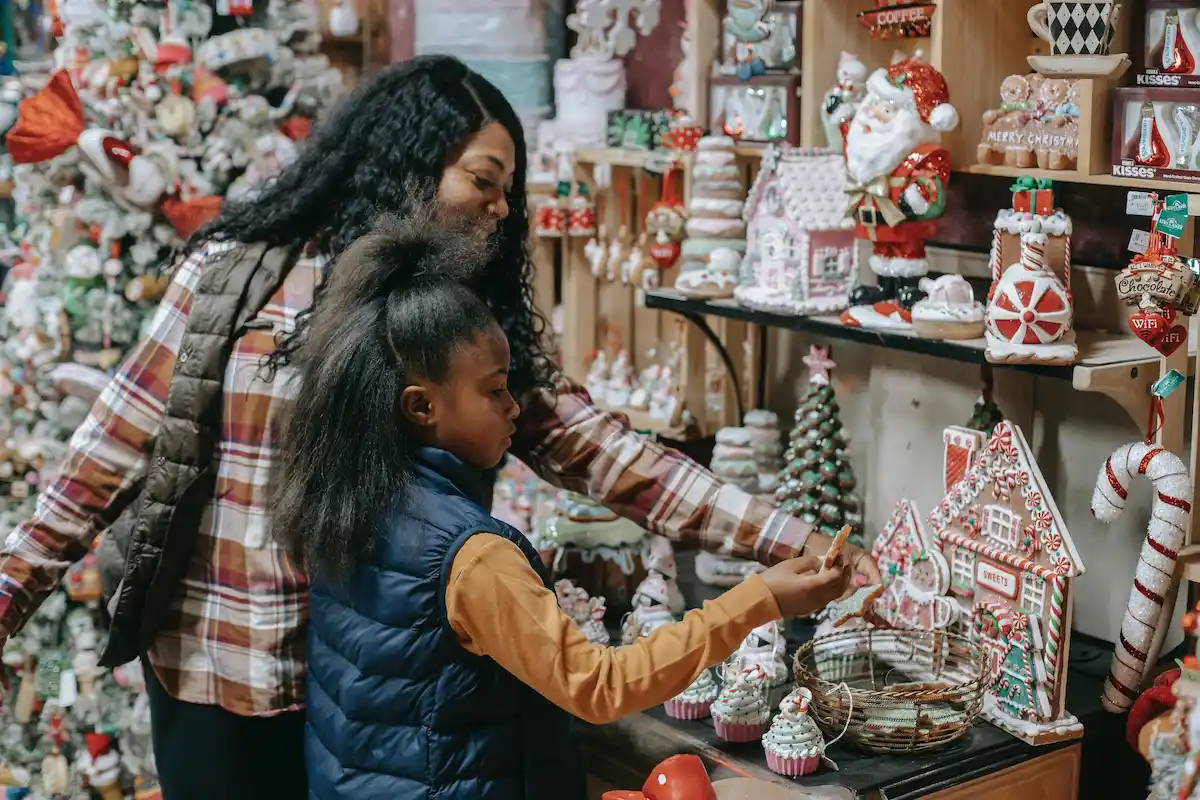
Retailers start selling holiday items early to compete with rivals. If one company starts selling Christmas candy early, then the other companies also have to. Some shoppers dislike this, but it works for the retailers and candy makers.
These days, some retailers don’t wait until November 1 to start selling winter holiday products. Shoppers can find Christmas items in September in some places.
Holiday candy is a great choice for shoppers because it's not too expensive. Many people like to buy holiday candy when they first see it. They can get a box of candy in November, enjoy it quickly, and go back to the store for more. This is good for candy makers.
Even though some people don't like seeing holiday items early, 43% of holiday shoppers start shopping before November, so they can avoid rushing at the last minute. They can also spread out their spending over two or three months. Shopping early for the winter holidays is becoming more popular.
Vocabulary19 words
- Winter holidays
- A special time to celebrate at the end of the year, such as Christmas, Hanukkah, Kwanzaa and New Year
- Retailer
- A store that sells things to people
- Customer
- A person who buys things from a store
- Spend
- To use money to buy something
- Celebration
- A big happy party or event
- Count on
- To trust that something will happen; To rely on someone or something to be there or happen; to feel confident something will happen
- One quarter
- ¼; one-fourth; 25%
- Annual
- every year; yearly; one year
- Compete
- to try to be better than others business or people in a particular activity or market
- Rival
- main challenger; opponent; enemy; opposition
- Shopper
- A person who buys things from stores
- Product
- something that is made to be sold or used by people; things you buy in a shop
- Item
- a single object or thing; one piece; a product
- Avoid
- stay away from; keep away; try not to do
- Rush
- To move quickly; to act or do urgently
- Last minute
- very close to the time something needs to be done; At the very end; no extra time
- Spread out
- To space things out over time; To make things cover a larger area of time or space
- Spending
- the act of giving money for goods and services; the action of paying money
- Popular
- Liked by many people
📚 Ready to use these words in a real conversation?
Practice live with a real tutor on Preply.

✅ Nice work on the quiz!
Keep the momentum going — book a live English lesson with a Preply tutor.

Fill-in-the-blank listening
Play the audio again and fill in the missing words as you listen.
_____ the winter holidays, retailers become _____ busy.
This year, retailers in the _____ think each customer will spend about £_____ ($900) on things like gifts and candy for Christmas, Kwanzaa, Hanukkah, and _____ celebrations.
Candy makers and _____ that sell candy count on the winter holidays to make a lot of _____. For Hershey, the biggest _____ maker in the world, the winter holidays, Halloween, and Easter are one quarter of their _____ business.
If the candy doesn’t _____, it’s expensive for the candy makers and _____.
Retailers _____ selling holiday items early to compete _____ rivals. If one company starts selling _____ candy early, then the other companies _____ have to. Some shoppers dislike _____, but it works for the retailers and _____ makers.
These days, some retailers _____ wait until November 1 to start selling _____ holiday products. Shoppers can _____ Christmas items in September in some places.
Holiday candy is a _____ choice for shoppers because it's not too expensive. Many _____ like to buy holiday candy when they first _____ it. They can get a _____ of candy in November, enjoy it quickly, and go _____ to the store for more. This is good for candy _____.
Even _____ some people don't like seeing holiday items early, _____% of holiday shoppers start shopping _____ November, so they can avoid rushing at the last _____. They can also spread out their _____ over two or three months. Shopping _____ for the winter holidays is becoming more _____.
Discussion questions
- Do you enjoy the winter holidays? Why or why not?
- Do you think it's a good idea for retailers to start selling holiday items early? Why or why not?
- What are some of the benefits and drawbacks of shopping for the winter holidays early?
- How do you feel about the idea of a three-month-long holiday shopping season, starting in October? What about Halloween?
🎓 Enjoyed this story?
Turn today's reading into real speaking practice with a live Preply tutor.
More Business stories
Next story · Medium
South Africa win the Rugby World Cup